Tuesday, November 30, 2010

AIG -The Inside Job


Advertised as 'The movie that took over $20 Trillion dollars to make", Inside Job, is now on the screens of theaters throughout the nation. The movie's premise is that the recent,  systemic,   financial collapse was founded upon AIG's  feared inability to payout on the claims for failed sophisticated financial instruments that AIG insured. The resulting consequences of the AIG bailout  became a vehicle to shelter and fund Wall Street at enormous taxpayer expense.

The lack of criminal accountability for AIG, and the insurance industry's inadequate disclosures, poor ratings and reserves, bad investments and resulting political cover, left the industry destitute and unable to meet its fiduciary obligations to its insureds. Despite all of the bad news, AIG continued to pay bonuses to its executives, scheduled junkets and act as a conduit for payments. The movie questions who is actually regulating the financial/insurance industry, and whether the industry has now become so fused with American politics that Wall Street is insulated no  matter which political party is at the helm.

Workers' Compensation insurance coverage is premised on the legislative intent to provide remedial coverage and summary benefits. When major players in the insurance industry jeopardize that coverage, then the result impacts the ability of the system to function and causes lingering inability to pay. Government regulators have the moral, if not the legal obligation, to protect the system.

Pulmonary Embolism Held to Be A Vascular Disease

The NJ Appellate Division held that a pulmonary embolism was a vascular disease and not compensable under the NJ occupational disease provisions of the Workers' Compensation Act. The Court distinguished the medical event from an occupational exposure. Vascular disease are governed by a more stringent standard (NJSA34:15-72).


In reversing the trial court the Appellate Division, held that 5 elements need to be present to prove an occupational condition:

"From our review of the history and application of Section 31, we extrapolate five common themes of occupational disease claims. First, the employee is exposed to conditions that would be viewed as creating a likely risk of injury. Second, there is continued exposure to the work conditions. Third, there is an inherent hazard of continued exposure to the conditions. Fourth, there is attached to that job a hazard that distinguishes it from the usual run of occupations. Fifth, the claim is made because of long-term exposure, not because of one specific event."


The Court distinguished the episode from an "occupational heart condition" which the NJ Supreme Court ruled was compensable condition in Fiore. That condition was a hybrid compensable condition crafted between the standards of NJSA 34:15-31 and NJSA 34:15-7.

Renner v. ATT Docket No. A-3237-09T3, 2010 WL 4811913 (N.J.Super.A.D. 2010)

Monday, November 29, 2010

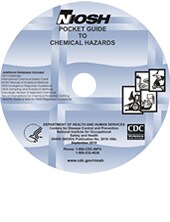
NIOSH Pocket Guide to Chemical Hazards Available for Free Download

The NIOSH Pocket Guide to Chemical Hazards (NPG) is intended as a source of general industrial hygiene information on several hundred chemicals/classes for workers, employers, and occupational health professionals. The NPG does not contain an analysis of all pertinent data, rather it presents key information and data in abbreviated or tabular form for chemicals or substance groupings (e.g. cyanides, fluorides, manganese compounds) that are found in the work environment. The information found in the NPG should help users recognize and control occupational chemical hazards.

Instructions for Downloading:
Download the NPG CD-Rom as a ISO image file and create a disc with CD-ROM authoring software.
The NPG ZIP file contains a condensed version of the NPG.
All non-Pocket Guide links were removed so that this set of files acts as a "stand-alone" database. These files can be used with a standard web browser or on some mobile devices.


  • 2010-168c.zip (245 MB) (requires WinZip or other unzipping software)
  • 2010-168c.exe(181 MB) (Self-extracting zip file for Windows)
  • 2010-168c.isoNIOSH publication number 2010-168c 
    (ISO Requires CD-Rom Authoring Software)

Friday, November 26, 2010

Hospitals Are Not For Sick People

The New England Journal of Medicine reports that hospitals remain unsafe. A study comparing the last 10 years reflects that there have been no significant changes in safety rates for patients entering hospitals.  For decades the number has been stable, close to 25% of hospital patients get sicker because of unsafe or unhealthy hospital conditions or activities.

"Among 2341 admissions, internal reviewers identified 588 harms (25.1 harms per 100 admissions; 95% confidence interval [CI], 23.1 to 27.2). Multivariate analyses of harms identified by internal reviewers showed no significant changes in the overall rate of harms per 1000 patient-days (reduction factor, 0.99 per year; 95% CI, 0.94 to 1.04; P=0.61) or the rate of preventable harms. There was a reduction in preventable harms identified by external reviewers that did not reach statistical significance (reduction factor, 0.92; 95% CI, 0.85 to 1.00; P=0.06), with no significant change in the overall rate of harms (reduction factor, 0.98; 95% CI, 0.93 to 1.04; P=0.47)."

Adverse complications of medical care provided to injured workers are compensation under workers' compensation. Employers and insurance carriers should encourage safe and harmless medical care for injured workers.

Temporal Trends in Rates of Patient Harm Resulting from Medical Care, N Engl J Med 2010; 363:2124-2134November 25, 2010

Tuesday, November 23, 2010

The Time for a Hexavalent Chromium Safety Standard Is Now


EPA announced the release of the Toxicological Review of Hexavalent Chromium in the September 30, 2010, Federal Register. This draft assessment is provided for public viewing and comment. Public comments received on the Toxicological Review during the public comment period will be provided to the external peer reviewers for their consideration. Any comments not received within the requested time period will be considered by EPA in their revisions. The deadline for comments is December 29, 2010.
EPA is conducting a peer review of the scientific basis supporting the human health hazard and dose-response assessment of hexavalent chromium that will appear on the Integrated Risk Information System (IRIS) database. 

Background

The draft Toxicological Review of Hexavalent Chromium provides scientific support and rationale for the hazard and dose-response assessment pertaining to chronic exposure to hexavalent chromium via ingestion. 

Chromium is a naturally occurring element in the earth’s crust. The three main forms of chromium found in the environment are chromium (0), chromium (III), and chromium (VI), also known as hexavalent chromium. Chromium is widely used in manufacturing processes, and it can be found in many consumer products such as wood treated with copper dichromate, leather tanned with chromic sulfate, and stainless steel cookware. Chromium is released to the environment from natural and anthropogenic sources, with the largest releases occurring from industrial sources. The general population may be exposed to chromium by inhaling ambient air, and ingesting food and drinking water containing chromium. Dermal exposure to chromium can occur from skin contact with certain consumer products or soils that contain chromium.

History/Chronology

Sep 1998
May 2010
EPA initiated an interagency science consultation to review the draft toxicological review and charge to external peer reviewers.
Sep 2010
EPA released the external review draft for public review and comment and the interagency science consultation review draft with comments. EPA also announced a public listening session to be held on November 18, 2010. [Federal Register Sep 30, 2010]
Nov 2010
EPA extended the public comment period an additional 30-days. [Federal Register Nov 10, 2010]

Next Steps

Following the conclusion of the public review and comment period, public listening session, and external peer review, the draft Toxicological Review will be revised and submitted for a final Agency review and an EPA-led Interagency Science Discussion. As a last step, the final assessment will be posted on the IRIS database.


Downloads

·      Charge to the External Reviewers (PDF)  (2 pp, 18 KB, about PDF)

Additional Information

Comments on the assessment may be submitted and reviewed using the e-Government Regulations.gov Web site. From the site, select “Environmental Protection Agency” and the keyword “EPA-HQ-ORD-2010-0540” (for the docket ID) to comment on this report.

Citation

U.S. EPA. IRIS Toxicological Review of Hexavalent Chromium (External Review Draft). U.S. Environmental Protection Agency, Washington, DC, EPA/635/R-10/004A, 2010.

California Office of Environmental Health Hazard Assessment (OEHHA), which supports a proposed Public Health Goal (PHG) of 0.06 parts per billion (ppb) in drinking water.

Delay
Industry groups, American Chemistry Council (ACC) has requested a delay in implementation. ACC  requested even more studies to determine whether CR6 is indeed safe.
Some have indicated that the chromium industry have withheld data concerning the safety of CR6. Experts have already confirmed that CR6 is very dangerous to humans, “Faced with the threat of stronger regulation, the chromium industry initiated an effort to challenge the scientific evidence supporting a more protective [OSHA workplace] standard [for inhalation]. This effort included the use of “product defense” consultants [Exponent and ChemRisk] to conduct post hoc analyses of a publicly-funded study to challenge results viewed unfavorably by the industry” (Michaels et al, 2006). Recent reports have indicated that US troops have allegedly become sickened from exposure to CR6 in Iraq and Afghanistan from burn pit exposures.

There appears  to be no valid reason to delay further the implementation of CR6 safety standards by EPA. 


Monday, November 22, 2010

Iowa Workers' Compensation Commissioner Tells Congress AMA Guides Are Objectionable

The Commissioner of the Iowa Division of Workers' Compensation, Christopher James Godfrey, recently testified before Congress that AMA Guides 6 Ed. were problematic. The Commissioner cited the 2008 Iowa Task Force report that found multiple errors and cultural bais in the AMA Guides.

An additional objection made was that the Guides were in conflict with both Iowa statutory and case law. The Commissioner stated, "With all due respect to Dr. Brigham, the Iowa Workers’ Compensation system will evolve and improve when it is decided by the citizens of Iowa that it will evolve and improve. The system will not evolve at the whim or business opportunity of either one physician, one medical association, or a small consensus of the two."


Enhanced by Zemanta

Congress Told Workers Compensation is a Deteriorating System

The former chair of the 1972 National Commission on Workers' Compensation told Congress that the present system is deteriorating and a new course of action is warranted. Profession Emeritis John F. Burton, Jr., last Wednesday testified before The Subcommittee on Workforce Protections of the Congressional Committee on Education and Labor.

Professor Burton told Congress that during the last 20 years he has observed the "...deterioration in adequacy and equity of state workers' compensation programs..." He reported that "the decline in workers' compensation cash benefits in the states during the 1990's is explained by ....changes in workers' compensation provisions and practice than  is explained by the drop in workplace injuries and disease during the decade."

Burton proposed that Congress consider new legislation to prohibit costs shifting from workers' compensation to Social Security Disability Insurance (SSDI). He advised the Subcommittee that cost shifting was continuing because 15 states were permitted to continue "reverse offset" provisions, the Social Security Administration (SSA) was paying benefits to workers who were not totally disabled under workers compensation acts, and a larger number injured workers were not qualifying for workers' compensation benefits.


As Professor points out, the aging workforce further complicates the burden placed upon the nation's Medicare system. With the erosion of the doctrine that workers' compensation takes the worker as it finds him or her, medical treatment for pre-existing conditions will be a growing cost for Medicare and a cost-shift from the workers' compensation system. The NY Times reported that, "Nearly one-fourth of Medicare beneficiaries have five or more chronic conditions. They account for two-thirds of the program’s spending."

A "reaffirmation" of "Federal standards" as enunciated in the 1972 National Commission report were recommended by Burton.  Additionally, he called upon Congress to enact legislation requiring employers and/or their insurance carriers reimburse Social Security for permanent disability cash benefits paid by Social Security for disability flowing from a work related event or disability.