Airs on American Experience on PBS Feb. 28, 2011 at 9:00pm on most PBS stations. Commemorating the workers' compensation centennial.
Showing posts with label Occupational safety and health. Show all posts
Monday, February 28, 2011
The Triangle Fire Airs on PBS Feb 28, 2011
It was the deadliest workplace accident in New York City’s history. A dropped cigarette on the 8th floor of the Triangle Shirtwaist Factory sparked a fire that killed over a hundred innocent people trapped inside. The private industry of the American factory would never be the same.
Airs on American Experience on PBS Feb. 28, 2011 at 9:00pm on most PBS stations. Commemorating the workers' compensation centennial.
Friday, January 21, 2011
Workers Compensation Blog Marks Over 100,000 Views
The Workers' Compensation Blog has now logged over 100,000 views since its inception on July 27, 2007. It continues as an academic experiment to identify and disseminate information about developments and trends in workplace injury law, and hopefully encouraging a safer work environment for future generations. With almost 700 posts on line, and a readership that reaches 7 continents, the experiment has far exceeded my expectations.
As the United States approaches its Workers' Compensation Act centennial celebrations, and history looks back upon the catalytic events, ie. the tragic Triangle Shirtwaist factory fire, that generated the model acts of 1911, it is hoped that experiments such as this blog will inspiring a new focus on critical issues such as workplace safety, the environment and international commerce that will embrace the system for the next 100 years.
Related articles
- US Workers Compensation Centennial Commission (workers-compensation.blogspot.com)
- High Workers Compensation Costs May Force County to Layoff 100 Workers (workers-compensation.blogspot.com)
- Congress Told Workers Compensation is a Deteriorating System (workers-compensation.blogspot.com)
- Federal Push to Cap Workers' Compensation Based on Age (workers-compensation.blogspot.com)
Tuesday, November 30, 2010
Pulmonary Embolism Held to Be A Vascular Disease
The NJ Appellate Division held that a pulmonary embolism was a vascular disease and not compensable under the NJ occupational disease provisions of the Workers' Compensation Act. The Court distinguished the medical event from an occupational exposure. Vascular disease are governed by a more stringent standard (NJSA34:15-72).
In reversing the trial court the Appellate Division, held that 5 elements need to be present to prove an occupational condition:
"From our review of the history and application of Section 31, we extrapolate five common themes of occupational disease claims. First, the employee is exposed to conditions that would be viewed as creating a likely risk of injury. Second, there is continued exposure to the work conditions. Third, there is an inherent hazard of continued exposure to the conditions. Fourth, there is attached to that job a hazard that distinguishes it from the usual run of occupations. Fifth, the claim is made because of long-term exposure, not because of one specific event."
In reversing the trial court the Appellate Division, held that 5 elements need to be present to prove an occupational condition:
"From our review of the history and application of Section 31, we extrapolate five common themes of occupational disease claims. First, the employee is exposed to conditions that would be viewed as creating a likely risk of injury. Second, there is continued exposure to the work conditions. Third, there is an inherent hazard of continued exposure to the conditions. Fourth, there is attached to that job a hazard that distinguishes it from the usual run of occupations. Fifth, the claim is made because of long-term exposure, not because of one specific event."
The Court distinguished the episode from an "occupational heart condition" which the NJ Supreme Court ruled was compensable condition in Fiore. That condition was a hybrid compensable condition crafted between the standards of NJSA 34:15-31 and NJSA 34:15-7.
Renner v. ATT Docket No. A-3237-09T3, 2010 WL 4811913 (N.J.Super.A.D. 2010)
Related articles
- NJ Denies an Occupational Workers Compensation For Last Exposure Applying Apportionment Rule (workers-compensation.blogspot.com)
- Study IDs Risk Factors for Blood Clots After Hip Surgery (nlm.nih.gov)
- Congress Told Workers Compensation is a Deteriorating System (workers-compensation.blogspot.com)
- Dean Emily Spieler Requests Congress to Review The Workers' Compensation Disability Rating System (workers-compensation.blogspot.com)
Monday, November 29, 2010
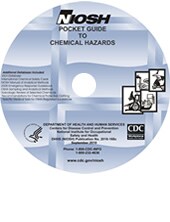
NIOSH Pocket Guide to Chemical Hazards Available for Free Download
The NIOSH Pocket Guide to Chemical Hazards (NPG) is intended as a source of general industrial hygiene information on several hundred chemicals/classes for workers, employers, and occupational health professionals. The NPG does not contain an analysis of all pertinent data, rather it presents key information and data in abbreviated or tabular form for chemicals or substance groupings (e.g. cyanides, fluorides, manganese compounds) that are found in the work environment. The information found in the NPG should help users recognize and control occupational chemical hazards.
Instructions for Downloading:
Download the NPG CD-Rom as a ISO image file and create a disc with CD-ROM authoring software.
The NPG ZIP file contains a condensed version of the NPG.
All non-Pocket Guide links were removed so that this set of files acts as a "stand-alone" database. These files can be used with a standard web browser or on some mobile devices.
Download the NPG CD-Rom as a ISO image file and create a disc with CD-ROM authoring software.
The NPG ZIP file contains a condensed version of the NPG.
All non-Pocket Guide links were removed so that this set of files acts as a "stand-alone" database. These files can be used with a standard web browser or on some mobile devices.
- 2010-168c.zip (245 MB) (requires WinZip or other unzipping software)
- 2010-168c.exe(181 MB) (Self-extracting zip file for Windows)
- 2010-168c.isoNIOSH publication number 2010-168c
(ISO Requires CD-Rom Authoring Software)
Related articles
- Workers Compensation and Nanotechnology - The New Frontier (workers-compensation.blogspot.com)
- The Time for a Hexavalent Chromium Safety Standard Is Now (workers-compensation.blogspot.com)
Thursday, November 4, 2010
NIOSH Supports Efforts To Ban Distracted Driving
The National Institute for Occupational Safety and Health (NIOSH) is following the lead of the US Department of Labor by encouraging employers to ban cell phone use while operating vehicles. An outright prohibition and supporting legislation may lead to the prohibition of workers' compensation benefits in many jurisdictions in the near future unless more global and radical action is taken to re-mediate this dangerous activity.
“While the basic distractions of cell phone calls or text messaging are similar whether one is driving on work time or on personal time, there are sources of distraction and incentives to engage in distracted driving behaviors that are unique to the workplace,” noted John Howard, M.D., Director of the National Institute for Occupational Safety and Health (NIOSH). “Someone driving on personal time has the leisure of waiting to return a friend’s call or text message. In these situations, minimizing risk is a matter of changing personal behavior and habits,” Dr. Howard said. “Workers, however, may be required or pressured by job demands to engage in distracted driving behaviors. Strong employer policies to curb the use of cell phones and in-vehicle technologies while driving are an important tool in creating a safe driving culture within an organization.”
Dr. Howard added, “NIOSH applauds the efforts of the Departments of Transportation and Labor to highlight the important role public and private employers can play in reducing distracted driving. We join them in urging employers to set policies to prohibit text messaging while driving. In addition, NIOSH will continue to work with our federal and other partners to support further efforts to reduce distracted driving in the workplace.”
.....
For over 3 decades the Law Offices of Jon L. Gelman 1.973.696.7900 jon@ gelmans.com have been representing injured workers and their families who have suffered work related accident and injuries.
Related articles
- The Trend to Exclude Distracted Driving From Workers' Compensation Coverage (workers-compensation.blogspot.com)
- Cell Phone Safety and Workers Compensation (workers-compensation.blogspot.com)
- New Distracted Driving Video Serves as Wake-Up Call for Employers (eon.businesswire.com)
Tuesday, August 31, 2010
Workplace Safety is the Most Important Issue This Labor Day
More than 85% of of the workers polled this Labor Day consider workplace safety as the most important issue. The study, "Public Attitudes Towards and Experiences with Workplace Safety," draws on dozens of surveys and polls conducted by NORC, one of the nation's leading academic survey operations, think tanks and public opinion firms. NORC’s analysis sought to gain a picture of Americans' experiences with workplace safety issues. The study was done for the Public Welfare Foundation, based in Washington, DC, which supports efforts to improve workers' rights.
Click here to read the study.
For over 3 decades the Law Offices of Jon L. Gelman 1.973.696.7900 jon@gelmans.com have been representing injured workers and their families who have suffered occupational exposures,
Related articles:
- Workers rate safety most important workplace issue in new Labor Day study (scienceblog.com)
- Workplace safety records go online this fall (cbc.ca)
- 85% of Americans Say Workplace Safety Regulations are "Very Important" (workinprogress.firedoglake.com)
- Workplace safety website falls short of pledge (newswire.ca)
- Workers rate safety most important workplace issue in new Labor Day study (physorg.com)
- Workplace safety ranked #1 labor standard [The Pump Handle] (scienceblogs.com)
Saturday, August 28, 2010
There is No Good Asbestos -- It Is All a Killer
Chrysotile Asbestos and Mesothelioma
Jump to
Richard A. Lemen
Assistant Surgeon General, U.S. Public Health Service (retired), National Institute for Occupational Safety and Health (retired), Canton, Georgia, E-mail: richard@ralemen.org
Citation: Lemen RA 2010. Chrysotile Asbestos and Mesothelioma. Environ Health Perspect 118:a282-a282. doi:10.1289/ehp.1002446
Online: 01 July 2010
Editor’s Note: We appreciate Lemen’s concern about the incorrect statement that was included in the original Editor’s Summary for Tse et al. (2010), and we regret the error. The Editor’s Summary has been corrected in the online version of the paper, and an erratum was published in the June issue of EHP [118:A240 (2010)]; the text of the erratum is included below:
The Editor’s Summary for the article “Are Current or Future Mesothelioma Epidemics in Hong Kong the Tragic Legacy of Uncontrolled Use of Asbestos in the Past?” by Tse et al. [Environ Health Perspect 118:382–386 (2010); doi:10.1289/ehp.0900868], has been corrected online: specifically, “(which has been implicated but not conclusively established as a cause of mesothelioma)” has been deleted.
The author testifies in asbestos litigation on behalf of plaintiffs.
The Editor’s Summary for the article by Tse et al. (2010) stated the following:
Assuming an average latency of 42 years, the authors predict that incidence rates will peak in 2009 and that diagnoses will peak in 2014. However, they caution that ongoing use of chrysotile asbestos (which has been implicated but not conclusively established as a cause of mesothelioma) and the release of asbestos fibers from older buildings during demolition or renovation may slow the projected decline.
The statement concerning chrysotile asbestos being “implicated but not conclusively established as a cause of mesothelioma” is inconsistent with current scientific opinion. I refer you to the most recent evaluation by the International Agency for Research on Cancer in which Straif et al. (2009) stated,
Epidemiological evidence has increasingly shown an association of all forms of asbestos (chrysotile, crocidolite, amosite, tremolite, actinolite, and anthophyllite) with an increased risk of lung cancer and mesothelioma. Although the potency differences with respect to lung cancer or mesothelioma for fibres of various types and dimensions are debated, the fundamental conclusion is that all forms of asbestos are “carcinogenic to humans” (Group 1).
In addition, opinions such as that expressed in the Editor’s Summary are advanced only by scientists with prochrysotile industry bias.
When I wrote the draft for the first IARC Monograph on asbestos in 1976, which the expert committee accepted and published in 1977 as IARC Monograph Volume 14, a similar conclusion was stated: “Many pleural and peritoneal mesotheliomas have been observed after occupational exposure to crocidolite, amosite and chrysotile.” Since then—more than 30 years—science has not changed its opinion that all forms of asbestos, including chrysotile, cause mesothelioma.
In fact, in the article that is the subject of the Editor’s Summary, Tse et al. (2010) did not indicate that chrysotile is not a cause of mesothelioma; on the contrary, they stated the following:
Although the mesothelioma incidence is anticipated to decline in the coming decades, it may not decrease to background risk levels given that chrysotile consumption has not been banned under the current legislation and that secondary asbestos exposure from the environment will likely continue. Nevertheless, the hypotheses generated from this ecologic study need further confirmation by subsequent analytic studies. The present study provides supportive evidence for an immediate and global ban on asbestos use.
I hope that future Editor’s Summaries will reflect the conclusions of the article and not put forth statements that are not supported by mainstream science. I also support the conclusion of Tse e al. (2010) for “an immediate and global ban on asbestos use.”
References Top
- IARC 1977. Asbestos. IARC Monogr Eval Carcinog Risk Hum 14: 1–106. FIND THIS ARTICLE ONLINE
- Straif K, Benbrahim-Tallaa L, Baan R, Grosse Y, Secretan B, El Ghissassi F, et al. 2009. A review of human carcinogens—part C: metals, arsenic, dusts, and fibres. Lancet Oncol 10: 453. –454. FIND THIS ARTICLE ONLINE
- Tse LA, Yu IT, Goggins W, Clements M, Wang XR, Au JS, et al. 2010. Are current or future mesothelioma epidemics in Hong Kong the tragic legacy of uncontrolled use of asbestos in the past? Environ Health Perspect 118: 382–386. FIND THIS ARTICLE ONLINE
Click here to read more about asbestos related disease and claims for benefits. For over 3 decades the Law Offices of Jon L. Gelman 1.973.696.7900 jon@gelmans.com have been representing injured workers and their families who have suffered asbestos related illnesses.
Related articles
- Is there still a lot of asbestos in American homes? (greenanswers.com)
- Quebec government urged to rethink loan for resumed mining in Canadian town of Asbestos (guardian.co.uk)
- Tell Canada to Quit Targeting the Developing World With Deadly Asbestos (globalpoverty.change.org)
- Ban asbestos worldwide: doctors (cbc.ca)
Friday, August 20, 2010
US Workplace Deaths Decrease
A preliminary total of 4,340 fatal work injuries were recorded in the United States in 2009, down from a final count of 5,214 fatal work injuries in 2008. The 2009 total represents the smallest annual preliminary total since the Census of Fatal Occupational Injuries (CFOI) program was first conducted in 1992. Based on this preliminary count, the rate of fatal work injury for U.S. workers in 2009 was 3.3 per 100,000 full-time equivalent (FTE) workers, down from a final rate of 3.7 in 2008. Counts and rates are likely to increase with the release of final 2009 CFOI results in April 2011. Over the last 2 years, increases in the published counts based on information received after the publication of preliminary results have averaged 156 fatalities per year or about 3 percent of the revised totals.
Economic factors played a major role in the fatal work injury decrease in 2009. Total hours worked fell by 6 percent in 2009 following a 1 percent decline in 2008, and some industries that have historically accounted for a significant share of fatal work injuries, such as construction, experienced even larger declines in employment or hours worked. In addition, some source documents used by CFOI State partners to identify and verify fatal work injuries were delayed, due at least in part to fiscal constraints at some of the governmental agencies who regularly provide source documentation for the program.
Key preliminary findings of the 2009 Census of Fatal Occupational Injuries:
- Workplace homicides declined 1 percent in 2009, in contrast to an overall decline of 17 percent for all fatal work injuries. The homicide total for 2009 includes the 13 victims of the November shooting at Fort Hood. Workplace suicides were down 10 percent in 2009 from the series high of 263 in 2008.
- Though wage and salary workers and self-employed workers experienced similar declines in total hours worked in 2009, fatal work injuries among wage and salary workers in 2009 declined by 20 percent while fatal injuries among self-employed workers were down 3 percent.
- The wholesale trade industry was one of the few major private industry sectors reporting higher numbers of fatal work injuries in 2009.
- Fatal work injuries in the private construction sector declined by 16 percent in 2009 following the decline of 19 percent in 2008.
- Fatalities among non-Hispanic black or African-American workers were down 24 percent. This worker group also experienced a slightly larger decline in total hours worked than non-Hispanic white or Hispanic workers.
- The number of fatal workplace injuries in building and grounds cleaning and maintenance occupations rose 6 percent, one of the few major occupation groups to record an increase in fatal work injuries in 2009.
- Transportation incidents, which accounted for nearly two-fifths of all the fatal work injuries in 2009, fell 21 percent from the 2,130 fatal work injuries reported in 2008.
Related articles by Zemanta
- Fatal Workplace Injuries Declined 17% in 2009 (nytimes.com)
- Workplace deaths fall to lowest since 1992 (abclocal.go.com)
- Workplace Deaths Fall to Lowest Level Since '92 (online.wsj.com)
- Workplace deaths fall to lowest level since 1992 (usatoday.com)
Click here for more information on how Jon L Gelman can assist you in a claim for workers' Compensation claim benefits. You may e-mail Jon Gelman or call 1-973-696-7900.
...........................
Comment:
The BLS fatality figures are the fatalities from injuries that occurred at the worksite or shortly thereafter, and do not include occupational illness fatalities, the latter primarily from toxic chemical exposures in the workplace.
Worker deaths from toxic exposures, other work illnesses are conservatively estimated by NIOSH, Steenland, Markowitrz, and other researchers at 50,00 to 60,000 deaths each year, or ten times the number of fatalities from work injuries. It is a disaster of monumental proportions that goes largely unrecorded. The United States has no comprehensive occupational health data collection system.
As we have lagged behind other nations in our lack of a national comprehensive medical and statistical database on occupational illnesses, occupational injuries; we have lagged behind in the research into the causes and consequences of occupational illnesses that would lead to improved diagnosis, treatment, prognosis, and ultimately prevention, of occupational toxic exposures and resultant diseases.
...........................
Comment:
The BLS fatality figures are the fatalities from injuries that occurred at the worksite or shortly thereafter, and do not include occupational illness fatalities, the latter primarily from toxic chemical exposures in the workplace.
Worker deaths from toxic exposures, other work illnesses are conservatively estimated by NIOSH, Steenland, Markowitrz, and other researchers at 50,00 to 60,000 deaths each year, or ten times the number of fatalities from work injuries. It is a disaster of monumental proportions that goes largely unrecorded. The United States has no comprehensive occupational health data collection system.
As we have lagged behind other nations in our lack of a national comprehensive medical and statistical database on occupational illnesses, occupational injuries; we have lagged behind in the research into the causes and consequences of occupational illnesses that would lead to improved diagnosis, treatment, prognosis, and ultimately prevention, of occupational toxic exposures and resultant diseases.
Patrice Woeppel, Ed.D.
Author: Depraved Indifference: the Workers' Compensation System
Friday, July 30, 2010
Lung Cancer Risk High Despite Absence of Asbestosis Diagnosis
Click here to read more about workers' compensation and claims for benefits. For over 3 decades the Law Offices of Jon L. Gelman 1.973.696.7900 jon@gelmans.com have been representing injured workers and their families who have suffered asbestos related illnesses.
Subscribe to:
Posts (Atom)