Showing posts with label National Institute for Occupational Safety and Health. Show all posts

Thursday, March 10, 2011

NIOSH Seeks Information About World Trade Center Cancer Claims

September 11, 2001 attacks in New York City: V...Image via Wikipedia

The Director of the National Institute for Occupational Safety and Health (NIOSH) of the Centers for Disease Control and Prevention (CDC) serves as the World Trade Center (WTC) Program Administrator for certain functions related to the WTC Health Program established by the James Zadroga 9/11 Health and Compensation Act (Pub. L. 111-347). 

In accordance with Section 3312(a)(5)(A) of that Act, the WTC Program Administrator is conducting a review of all available scientific and medical evidence to determine if, based on the scientific evidence, cancer or a certain type of cancer should be added to the applicable list of health conditions covered by the World Trade Center Health Program.
The WTC Program Administrator is requesting information on the following:
  • (1) Relevant reports, publications, and case information of scientific and medical findings where exposure to airborne toxins, any other hazard, or any other adverse condition resulting from the September 11, 2001 terrorist attacks, is substantially likely to be a significant factor in aggravating, contributing to, or causing cancer or a type of cancer; 
  • (2) clinical findings from the Clinical Centers of Excellence providing monitoring and treatment services to WTC responders (i.e., those persons who performed rescue, recovery, clean- up and remediation work on the WTC disaster sites) and community members directly exposed to the dust cloud on 9/11/01; and 
  • (3) input on the scientific criteria to be used by experts to evaluate the weight of the medical and scientific evidence regarding such potential health conditions. 

DATES: Comments must be received by March 31, 2011. ADDRESSES: You may submit comments, identified by docket number NIOSH- 227, by any of the following methods: 
  • Mail: NIOSH Docket Office, Robert A. Taft Laboratories, MS-C34, 4676 Columbia Parkway, Cincinnati, OH 45226. 
  • Facsimile: (513) 533-8285. E-mail: nioshdocket@cdc.gov. All information received in response to this notice will be available for public examination and copying at the NIOSH Docket Office, 4676 Columbia Parkway, Cincinnati, Ohio 45226. The comment period for NIOSH-227 will close on March 31, 2011. 
All comments received will be available on the NIOSH Docket Web page at http:// www.cdc.gov/niosh/docket by April 30, and comments will be available in writing by request. NIOSH includes all comments received without change in the docket and the electronic docket, including any personal information provided.

For over 3 decades the Law Offices of Jon L. Gelman  1.973.696.7900  jon@gelmans.com have been representing injured workers and their families who have suffered asbestos related disease. Please contact our office if you require assistance in filing a claim under the newly enacted James Zadroga 9/11 Health and Compensation Act.

Brazilian Blowout Abandons Suits Against Oregon OSHA for Formaldehyde Findings

A company that makes a hair straightening product, Brazilian Blowout, has dropped a lawsuit that it had filed against Oregon OSHA (Occupational Safety and Health Administration) challeging the agency's findings that the product contained formaldehyde, a known carcinogen.

OSHA had tested 105 samples of the air product from 54 hair salons and reported significant formaldehyde findings. The lawsuit, filed by the company, alleged that the testing was incorrect.

The report had concluded, "Oregon OSHA and CROET have concluded that there are meaningful risks to salon workers  when they are confronted with these hair smoothing products. Effective control of those risks depends upon accurate information regarding the potential hazards and the control measures  available, which in turn begins with an accurate understanding of the ingredients and the potential harm they may cause."

Related articles

Friday, March 4, 2011

Asbestos Awareness Conference To Focus on Public Health, Environment and The Economy

The Asbestos Disease Awareness Organization (ADAO), the largest U.S. organization serving as the voice of asbestos victims, presents its 7th Annual Asbestos Awareness Conference, Asbestos: Impact on Public Heath, Environment, and the Economy. The event will be held April 1 - 3, 2011, at the Atlanta Marriott Buckhead Hotel & Conference Center. This conference is made possible with the support of the Barbara Ann Karmanos Cancer Institute. Presentations will include occupational and non-occupational exposure issues, detection and treatment advances, environmental and economic impact, national and global policy. 

The international conference brings together experts from around the globe to collaborate and enhance efforts to completely ban asbestos. Attendees will hear about the most advanced medical, occupational and environmental information to prevent home, school and work asbestos exposure; as well as disease prevention and treatment. 

The conference will also quantify the economic impact of asbestos exposure to individuals, business and the government. Speakers will represent the United States, Canada, Mexico, Brazil, Japan, and Germany. The ADAO international conference is made possible with the support and collaborative efforts of the Barbara Ann Karmanos Cancer Institute in Detroit. Registration includes continental breakfast and lunch. 

Linda Reinstein, President/CEO and Co-Founder of the Asbestos Disease Awareness Organization, knows first hand the pain that can result from asbestos exposure after loosing her husband in 2006 to mesothelioma, a leading asbestos caused cancer. “ADAO is dedicated to the three core principles – education, advocacy, and community – as reaffirmed by this year’s powerful conference,” stated Reinstein. “This year’s event brings together some of the world’s most important voices, including leading professionals from different fields who play a pivotal role in globally uniting efforts to end asbestos disease. We welcome them and thank our many generous sponsors who are helping to make this event possible. There is indeed power in knowledge.” 

According to Michael Harbut M.D., MPH, FCCP, of the Barbara Ann Karmanos Cancer Institute, “The ADAO conference is one of the best educational and awareness opportunities for physicians, public health representatives, caregivers and other advocates. We all have an opportunity to make an impact on preventing asbestos-related diseases. Whether you’re a medical professional or someone who deeply cares about the health of your loved ones, this conference offers an important network for everyone.” 

The weekend will provide information and inspiration for those impacted by asbestos-related disease as well as others who advocate for safe environments. 

The conference also will recognize US Senator Max Baucus, and others,  those who have demonstrated exceptional service to enhance asbestos awareness. The Unity and Remembrance Brunch on April 3 will honor and remember loved ones lost to asbestos exposure, as well as support others impacted by asbestos-related diseases.


Thursday, March 3, 2011

Public Meeting Held On Zadroga Health Compensation Fund

A public hearing, sponsored by the National Institute for Occupational Safety and Health (NIOSH), was held Thursday in New York City concerning the James Zadroga 9/11 Health and Compensation Act of 2010 (Pub. L 111-347). The purpose of the government sponsored meeting was to solicite comments on how to implement the Federal benefit program that was signed into law at the end of last year by President Obama.

Victims, their families and representatives were among the presenters at the day-long hearing. A major area of concern at the hearing was whether the program will cover cancer claims and claims for anxiety based diseases that resulted from the World Trade Center attack on September 11, 2001. The toxic cloud of dust and fumes that emanated from the site is of serious concern to medical professionals because of the known pulmonary irritants and carcinogens, including asbestos, that it contained and transported.

The law provides for additional benefits to those who worked near the site during the months following the disaster. Not only are first responders permitted to file for benefits, but the program provides coverage to those who were utility workers, who were involved in the restoration of services, ie. telephone and power, and it also includes those who were involved in the clean-up of the area and local residents.

Comments will accepted until 5:00pm EDT on April 29, 2011 and an implementation plan will be formalized by July, 2011. 

Saturday, February 19, 2011

OSHA Fines NJ Contractor $45,450 For Safety Violations

The U.S. Department of Labor's Occupational Safety and Health Administration has cited the general contractor for the Sheridan Avenue Steam Plant renovation project in Albany for repeat and serious violations of safety standards. Plato Construction Corp. of Hopewell, N.J., faces a total of $45,540 in proposed fines, chiefly for scaffold and fall hazards.

"Falls are among the deadliest hazards in construction. They can end a life or a career in seconds," said Edward Jerome, OSHA's area director in Albany. "Proper scaffold erection, safe work practices and effective fall protection are critical in protecting workers against this potentially deadly hazard."

OSHA found employees exposed to fall hazards ranging from 27 to 41 feet while working without fall protection on a scaffold that was not fully guarded, climbing atop the scaffold's guardrails and standing on an empty plastic bucket on the scaffold's deck. The agency has alleged that scaffold's tiebacks were not anchored securely, its pulley block was damaged, and it had not been erected by a competent person. Other hazards included an electrical panel box that was not protected against water, a power cord that lacked strain relief, an unguarded grinder blade and a damaged power cord with exposed wiring.

OSHA issued Plato Construction Corp. two repeat citations with $13,200 in proposed fines for the lack of scaffold fall protection and the damaged power cord, and nine serious citations with $32,340 in fines for the remaining items. OSHA issues a serious citation when there is substantial probability that death or serious physical harm could result from a hazard about which the employer knew or should have known. The repeat citations stem from OSHA's having cited the company in December 2006 for similar hazards at a Philadelphia, Pa., worksite. A repeat citation is issued when an employer previously has been cited for the same or a similar violation of a standard, regulation, rule or order at any other facility in federal enforcement states within the last five years.

"One means of eliminating recurring hazards such as these is for employers to establish an injury and illness prevention program in which workers and management work together to continually eliminate hazardous conditions," said Robert Kulick, OSHA's regional administrator in New York.

Thursday, February 10, 2011

Public Meeting on Implementation of the Zadroga 9/11 Health and Compensation Act


The National Institute for Occupational Safety and Health (NIOSH) will host a public meeting on March 3 in New York City to receive comments from the public on implementing the provisions of the James Zadroga 9/11 Health and Compensation Act of 2010 (Public Law 111-347).
NIOSH will convene the public meeting in response to a request by Reps. Carolyn B. Maloney (D-NY), Jerrold Nadler (D-NY), and Peter T. King (R-NY), the primary sponsors of the James Zadroga 9/11 Health and Compensation Act of 2010 in the U.S. House of Representatives. The meeting will be held from 9:00 a.m. to 4:45 p.m., Eastern Time, at the Jacob K. Javits Federal Building, 26 Federal Plaza, Broadway entrance, 6th Floor, Conference Room A/B, New York, N.Y. 10278.
The meeting is open to the public, limited by the space available. The meeting space accommodates approximately 300 people, and will be available on a first-come-first-served basis. In addition, there will be an audio conference setup for those who cannot attend in person. The toll-free call-in number is 1-800-619-8873; pass code 8693287.
The James Zadroga 9/11 Health and Compensation Act of 2010 established the World Trade Center Health Program within the U.S. Department of Health and Human Services, of which NIOSH is part. Comments from the public will help the Federal government in developing a plan to implement the Act by gaining perspectives from interested parties on ways to meet the Act's requirements.
The Act's requirements include:
  • Medical monitoring for responders who were likely to have been exposed to airborne toxins that were released, or to other hazards, as a result of the September 11, 2001, terrorist attacks.
  • Initial health evaluation for survivors.
  • Follow-up monitoring and treatment for responders and survivors related to World Trade Center-related health conditions.
  • Education and outreach to potentially eligible individuals.
  • Clinical data collection and analysis.
  • Research on health conditions.
A copy of the full Act is available at www.cdc.gov/niosh/topics/wtc/hr847.html. A notice of the public meeting with further information on attendance and registration is scheduled to be posted in the Federal Register on Feb. 10.
For over 3 decades the Law Offices of Jon L. Gelman  1.973.696.7900  jon@gelmans.com have been representing injured workers and their families who have suffered asbestos related disease. Please contact our office if you require assistance in filing a claim under the newly enacted James Zadroga 9/11 Health and Compensation Act.
Related articles

Wednesday, January 5, 2011

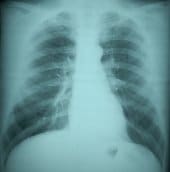
NIOSH Proposes New Digital Classification for Pneumoconiosis

Monitoring the health of individuals involved in dusty work is intended to provide assurance to the worker that ongoing exposure controls are adequate. Recognition of minor health abnormalities serves as an early warning to both workers and managers when there is need for more effective measures to prevent work-related impairment and disability. Since 1970, NIOSH and other organizations have successfully applied traditional film screen chest radiography, interpreted using the ILO International Classification of Radiographs of Pneumoconiosis, toward these objectives. 

Imaging of interstitial lung diseases such as the pneumoconiosis represents one of the most difficult challenges in diagnostic radiology, and comprehensive attention to technological, methodological, and human factors is required to assure that the image quality and interpretation are satisfactory for achieving early disease detection. 

This NIOSH Guideline is based upon accepted contemporary professional recommendations, and provides technical and operational guidance for radiographic facilities and physician readers who obtain digital chest radiographs for the evaluation of pneumoconiosis. The intent is to assure that the recognition of pneumoconiosis using digitally-acquired chest radiographs is at least as safe and effective as traditional film screen radiography. The Guideline should not be considered a mandate for medical practice; however participating practitioners and facilities who deviate from the specifications should have a sound medical rationale for alternative approaches.

Friday, December 31, 2010

NIOSH Focuses On Safety of Nanotechnology

On Wednesday, April 8, 2009 [74 FR 15985], the National Institute for Occupational Safety and Health (NIOSH) of the Centers for Disease Control and Prevention (CDC), announced in the Federal Register plans to evaluate the scientific data on carbon nanotubes and to issue its findings on the potential health risks. A draft Current Intelligence Bulletin entitled ``Occupational Exposure to Carbon Nanotubes and Nanofibers'' has been developed which contains an assessment of the toxicological data and provides recommendations for the safe handling of these materials. NIOSH is seeking comments on the draft document and plans to have a public meeting to discuss the document. The draft document and instructions for submitting comments can be found at http://www.cdc.gov/niosh/docket/review/docket161A/ default.html.

NIOSH has interest in:
(1) Identification of industries or occupations in which exposures to carbon nanotubes and nanofibers can occur; 
(2) Trends in the production and use of carbon nanotubes and nanofibers; 
(3) Exposure measurement data; 
(4) Case reports or other health information demonstrating possible health effects in workers exposed to carbon nanotubes or nanofibers; 
(5) Reports of experimental in vivo and in vitro studies that provide evidence of a dose-relationship between exposure to carbon nanotubes and nanofibers and biological activity; 
(6) Reports of experimental data on the airborne characteristics of carbon nanotubes or nanofibers, including information on the amounts that are inhalable and respirable; 
(7) Criteria and rationale for including workers in a medical surveillance and screening program; 
(8) Description of work practices and engineering controls used to reduce or prevent workplace exposure to carbon nanotubes and nanofibers; and 
(9) Educational materials for worker safety and training on the safe handling of carbon nanotubes and nanofibers.

This announcement follows an earlier conference by NIOSH in July 2010.

Saturday, December 4, 2010

California Becomes First State to Set Safety Guidelines for Flavoring Chemical


Cal/OSHA continues to be a national leader in worker safety by implementing a new standard today to protect employees who work with diacetyl, a chemical commonly used to give food flavorings a buttery taste.  Cal/OSHA, a division of the California Department of Industrial Relations (DIR), is the only state-OSHA plan to have such a standard.    
"The diacetyl standard is the latest example of how Cal/OSHA is on the forefront of worker safety," said DIR Director John C. Duncan.  "We have taken the lead on this issue from day one and have worked closely with national medical experts as well as the National Institute of Occupational Safety and Health to get to this point. We refuse to wait until more workers suffer serious lung ailments to take action. At this time, not even Federal OSHA has a safety regulation for diacetyl, but we hope that this standard will serve as a model for them to follow."  
The new standard, section 5197 of the California Code of Regulations, requires employers covered by the standard to create a regulated area for each process using diacetyl, unless the process is enclosed.  Employers must also provide safeguards for employees who work with diacetyl at certain concentrations.  These safety measures include creating a written diacetyl control program, periodic monitoring of exposure levels and providing personal protective equipment, respirators, training, and medical surveillance at no cost to employees.  The standard goes into effect today.
"Diacetyl, a chemical that is harmless when it occurs naturally or as an ingredient in many of the foods we eat, can be dangerous in industrial settings where flavorings or foods are manufactured because it is used in much higher concentrations that allow it to get into the air that workers breathe," said Cal/OSHA Chief Len Welsh.  "Cal/OSHA has issued citations in the past related to exposure to diacetyl, but this comprehensive standard will allow us to better target our enforcement efforts."
Workers from two California flavoring companies that use diacetyl have been diagnosed with bronchiolitis obliterans -- inflammation and scarring of the small airways that can result in permanent and life threatening narrowing of the airways.  A number of employees nationwide who have been exposed to diacetyl have developed the serious respiratory illness which in some cases has resulted in patients being placed on lung transplant wait lists or dying.  Symptoms include persistent dry cough, shortness of breath when using extra energy, and wheezing.  Workers' Compensation Acts provide some benefits for those exposed.
Cal/OSHA Consultation also works to protect employees from dangerous food-flavoring chemicals.  Consultation initiated its Flavor Industry Safety and Health Evaluation Program (FISHEP) in 2006 to provide assistance to California food flavor manufacturing companies.  Consultation staff conducted mandatory onsite evaluations and consultations with 28 California companies that use pure flavoring ingredients to manufacture food flavors.  

Monday, November 29, 2010

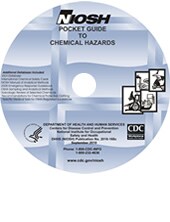
NIOSH Pocket Guide to Chemical Hazards Available for Free Download

The NIOSH Pocket Guide to Chemical Hazards (NPG) is intended as a source of general industrial hygiene information on several hundred chemicals/classes for workers, employers, and occupational health professionals. The NPG does not contain an analysis of all pertinent data, rather it presents key information and data in abbreviated or tabular form for chemicals or substance groupings (e.g. cyanides, fluorides, manganese compounds) that are found in the work environment. The information found in the NPG should help users recognize and control occupational chemical hazards.

Instructions for Downloading:
Download the NPG CD-Rom as a ISO image file and create a disc with CD-ROM authoring software.
The NPG ZIP file contains a condensed version of the NPG.
All non-Pocket Guide links were removed so that this set of files acts as a "stand-alone" database. These files can be used with a standard web browser or on some mobile devices.


  • 2010-168c.zip (245 MB) (requires WinZip or other unzipping software)
  • 2010-168c.exe(181 MB) (Self-extracting zip file for Windows)
  • 2010-168c.isoNIOSH publication number 2010-168c 
    (ISO Requires CD-Rom Authoring Software)

Thursday, November 4, 2010

NIOSH Supports Efforts To Ban Distracted Driving

The National Institute for Occupational Safety and Health (NIOSH) is following the lead of the US Department of Labor by encouraging employers to ban cell phone use while operating vehicles. An outright prohibition and supporting legislation may lead to the prohibition of workers' compensation benefits in many jurisdictions in the near future unless more global and radical action is taken to re-mediate this dangerous activity.

“While the basic distractions of cell phone calls or text messaging are similar whether one is driving on work time or on personal time, there are sources of distraction and incentives to engage in distracted driving behaviors that are unique to the workplace,” noted John Howard, M.D., Director of the National Institute for Occupational Safety and Health (NIOSH). “Someone driving on personal time has the leisure of waiting to return a friend’s call or text message. In these situations, minimizing risk is a matter of changing personal behavior and habits,” Dr. Howard said. “Workers, however, may be required or pressured by job demands to engage in distracted driving behaviors. Strong employer policies to curb the use of cell phones and in-vehicle technologies while driving are an important tool in creating a safe driving culture within an organization.”

Dr. Howard added, “NIOSH applauds the efforts of the Departments of Transportation and Labor to highlight the important role public and private employers can play in reducing distracted driving. We join them in urging employers to set policies to prohibit text messaging while driving. In addition, NIOSH will continue to work with our federal and other partners to support further efforts to reduce distracted driving in the workplace.”
.....
For over 3 decades the Law Offices of Jon L. Gelman 1.973.696.7900 jon@gelmans.com have been representing injured workers and their families who have suffered work related accident and injuries.

Related articles

Thursday, October 28, 2010

Workers Compensation and Nanotechnology - The New Frontier

NIOSH research has revealed that breathing nanoparticles may result in damaging health effects.

"Nanotechnology has the potential to revolutionize countless products, create computers smaller and faster than once could be imagined, and fight diseases such as cancer. According to the Project on Emerging Nanotechnology, by the summer of 2009 there were 1,015 consumer products using nanotechnology. That represents nearly a 19-fold increase over the 54 products listed in 2005. Nanotechnology involves the manipulation of matter at a near-atomic scale. Nanoparticles measure from 1 to 100 nanometers in size, with 1 billion nanometers forming a meter. For comparison, a billion inches would nearly circle the Earth 2 times."
  • A 2004 survey estimatedthat nearly 25,000 U.S. workers were employed at businesses that exclusively produced nanotechnology products.
  • Nanoparticles can enter the body through many routes including inhalation, swallowing, ingestion, and absorption through the skin.
  • Nanotechnology may present health risks but it can also be used to protect workers. New respirator designs, for instance, use nanotechnology to create more effective filters to block harmful substances.
Authors of Inhalation Versus Aspiration of Single-Walled Carbon Nanotubes in C57BL/6 Mice: Inflammation, Fibrosis, Oxidative Stress, and Mutagenesis—Anna Shvedova, Elena Kisin, Ashley Murray, Victor Johnson, Olga Gorelik, Sivaram Arepalli, Ann Hubbs, Robert Mercer, Phouthone Keohavong, Nancy Sussman, J. Jin, J. Yin, Samuel Stone, The-hsun Chen, Gregory Deye, Andrew Maynard, Vince Castranova, Paul Baron, and Valerian Kagan; Health Effects Laboratory Division; NIOSH—received the 2009 Alice Hamilton Award in the Biological Sciences category.
.....
For over 3 decades the Law Offices of Jon L. Gelman 1.973.696.7900 jon@gelmans.com have been representing injured workers and their families who have suffered work related accident and injuries.