Showing posts with label Occupational Health Safety. Show all posts

Thursday, March 10, 2011

NIOSH Seeks Information About World Trade Center Cancer Claims

September 11, 2001 attacks in New York City: V...Image via Wikipedia

The Director of the National Institute for Occupational Safety and Health (NIOSH) of the Centers for Disease Control and Prevention (CDC) serves as the World Trade Center (WTC) Program Administrator for certain functions related to the WTC Health Program established by the James Zadroga 9/11 Health and Compensation Act (Pub. L. 111-347). 

In accordance with Section 3312(a)(5)(A) of that Act, the WTC Program Administrator is conducting a review of all available scientific and medical evidence to determine if, based on the scientific evidence, cancer or a certain type of cancer should be added to the applicable list of health conditions covered by the World Trade Center Health Program.
The WTC Program Administrator is requesting information on the following:
  • (1) Relevant reports, publications, and case information of scientific and medical findings where exposure to airborne toxins, any other hazard, or any other adverse condition resulting from the September 11, 2001 terrorist attacks, is substantially likely to be a significant factor in aggravating, contributing to, or causing cancer or a type of cancer; 
  • (2) clinical findings from the Clinical Centers of Excellence providing monitoring and treatment services to WTC responders (i.e., those persons who performed rescue, recovery, clean- up and remediation work on the WTC disaster sites) and community members directly exposed to the dust cloud on 9/11/01; and 
  • (3) input on the scientific criteria to be used by experts to evaluate the weight of the medical and scientific evidence regarding such potential health conditions. 

DATES: Comments must be received by March 31, 2011. ADDRESSES: You may submit comments, identified by docket number NIOSH- 227, by any of the following methods: 
  • Mail: NIOSH Docket Office, Robert A. Taft Laboratories, MS-C34, 4676 Columbia Parkway, Cincinnati, OH 45226. 
  • Facsimile: (513) 533-8285. E-mail: nioshdocket@cdc.gov. All information received in response to this notice will be available for public examination and copying at the NIOSH Docket Office, 4676 Columbia Parkway, Cincinnati, Ohio 45226. The comment period for NIOSH-227 will close on March 31, 2011. 
All comments received will be available on the NIOSH Docket Web page at http:// www.cdc.gov/niosh/docket by April 30, and comments will be available in writing by request. NIOSH includes all comments received without change in the docket and the electronic docket, including any personal information provided.

For over 3 decades the Law Offices of Jon L. Gelman  1.973.696.7900  jon@gelmans.com have been representing injured workers and their families who have suffered asbestos related disease. Please contact our office if you require assistance in filing a claim under the newly enacted James Zadroga 9/11 Health and Compensation Act.

Brazilian Blowout Abandons Suits Against Oregon OSHA for Formaldehyde Findings

A company that makes a hair straightening product, Brazilian Blowout, has dropped a lawsuit that it had filed against Oregon OSHA (Occupational Safety and Health Administration) challeging the agency's findings that the product contained formaldehyde, a known carcinogen.

OSHA had tested 105 samples of the air product from 54 hair salons and reported significant formaldehyde findings. The lawsuit, filed by the company, alleged that the testing was incorrect.

The report had concluded, "Oregon OSHA and CROET have concluded that there are meaningful risks to salon workers  when they are confronted with these hair smoothing products. Effective control of those risks depends upon accurate information regarding the potential hazards and the control measures  available, which in turn begins with an accurate understanding of the ingredients and the potential harm they may cause."

Related articles

Thursday, February 10, 2011

Public Meeting on Implementation of the Zadroga 9/11 Health and Compensation Act


The National Institute for Occupational Safety and Health (NIOSH) will host a public meeting on March 3 in New York City to receive comments from the public on implementing the provisions of the James Zadroga 9/11 Health and Compensation Act of 2010 (Public Law 111-347).
NIOSH will convene the public meeting in response to a request by Reps. Carolyn B. Maloney (D-NY), Jerrold Nadler (D-NY), and Peter T. King (R-NY), the primary sponsors of the James Zadroga 9/11 Health and Compensation Act of 2010 in the U.S. House of Representatives. The meeting will be held from 9:00 a.m. to 4:45 p.m., Eastern Time, at the Jacob K. Javits Federal Building, 26 Federal Plaza, Broadway entrance, 6th Floor, Conference Room A/B, New York, N.Y. 10278.
The meeting is open to the public, limited by the space available. The meeting space accommodates approximately 300 people, and will be available on a first-come-first-served basis. In addition, there will be an audio conference setup for those who cannot attend in person. The toll-free call-in number is 1-800-619-8873; pass code 8693287.
The James Zadroga 9/11 Health and Compensation Act of 2010 established the World Trade Center Health Program within the U.S. Department of Health and Human Services, of which NIOSH is part. Comments from the public will help the Federal government in developing a plan to implement the Act by gaining perspectives from interested parties on ways to meet the Act's requirements.
The Act's requirements include:
  • Medical monitoring for responders who were likely to have been exposed to airborne toxins that were released, or to other hazards, as a result of the September 11, 2001, terrorist attacks.
  • Initial health evaluation for survivors.
  • Follow-up monitoring and treatment for responders and survivors related to World Trade Center-related health conditions.
  • Education and outreach to potentially eligible individuals.
  • Clinical data collection and analysis.
  • Research on health conditions.
A copy of the full Act is available at www.cdc.gov/niosh/topics/wtc/hr847.html. A notice of the public meeting with further information on attendance and registration is scheduled to be posted in the Federal Register on Feb. 10.
For over 3 decades the Law Offices of Jon L. Gelman  1.973.696.7900  jon@gelmans.com have been representing injured workers and their families who have suffered asbestos related disease. Please contact our office if you require assistance in filing a claim under the newly enacted James Zadroga 9/11 Health and Compensation Act.
Related articles

Wednesday, January 5, 2011

NIOSH Proposes New Digital Classification for Pneumoconiosis

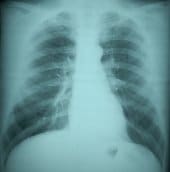
Monitoring the health of individuals involved in dusty work is intended to provide assurance to the worker that ongoing exposure controls are adequate. Recognition of minor health abnormalities serves as an early warning to both workers and managers when there is need for more effective measures to prevent work-related impairment and disability. Since 1970, NIOSH and other organizations have successfully applied traditional film screen chest radiography, interpreted using the ILO International Classification of Radiographs of Pneumoconiosis, toward these objectives. 

Imaging of interstitial lung diseases such as the pneumoconiosis represents one of the most difficult challenges in diagnostic radiology, and comprehensive attention to technological, methodological, and human factors is required to assure that the image quality and interpretation are satisfactory for achieving early disease detection. 

This NIOSH Guideline is based upon accepted contemporary professional recommendations, and provides technical and operational guidance for radiographic facilities and physician readers who obtain digital chest radiographs for the evaluation of pneumoconiosis. The intent is to assure that the recognition of pneumoconiosis using digitally-acquired chest radiographs is at least as safe and effective as traditional film screen radiography. The Guideline should not be considered a mandate for medical practice; however participating practitioners and facilities who deviate from the specifications should have a sound medical rationale for alternative approaches.

Friday, December 31, 2010

NIOSH Focuses On Safety of Nanotechnology

On Wednesday, April 8, 2009 [74 FR 15985], the National Institute for Occupational Safety and Health (NIOSH) of the Centers for Disease Control and Prevention (CDC), announced in the Federal Register plans to evaluate the scientific data on carbon nanotubes and to issue its findings on the potential health risks. A draft Current Intelligence Bulletin entitled ``Occupational Exposure to Carbon Nanotubes and Nanofibers'' has been developed which contains an assessment of the toxicological data and provides recommendations for the safe handling of these materials. NIOSH is seeking comments on the draft document and plans to have a public meeting to discuss the document. The draft document and instructions for submitting comments can be found at http://www.cdc.gov/niosh/docket/review/docket161A/ default.html.

NIOSH has interest in:
(1) Identification of industries or occupations in which exposures to carbon nanotubes and nanofibers can occur; 
(2) Trends in the production and use of carbon nanotubes and nanofibers; 
(3) Exposure measurement data; 
(4) Case reports or other health information demonstrating possible health effects in workers exposed to carbon nanotubes or nanofibers; 
(5) Reports of experimental in vivo and in vitro studies that provide evidence of a dose-relationship between exposure to carbon nanotubes and nanofibers and biological activity; 
(6) Reports of experimental data on the airborne characteristics of carbon nanotubes or nanofibers, including information on the amounts that are inhalable and respirable; 
(7) Criteria and rationale for including workers in a medical surveillance and screening program; 
(8) Description of work practices and engineering controls used to reduce or prevent workplace exposure to carbon nanotubes and nanofibers; and 
(9) Educational materials for worker safety and training on the safe handling of carbon nanotubes and nanofibers.

This announcement follows an earlier conference by NIOSH in July 2010.

Saturday, December 4, 2010

California Becomes First State to Set Safety Guidelines for Flavoring Chemical


Cal/OSHA continues to be a national leader in worker safety by implementing a new standard today to protect employees who work with diacetyl, a chemical commonly used to give food flavorings a buttery taste.  Cal/OSHA, a division of the California Department of Industrial Relations (DIR), is the only state-OSHA plan to have such a standard.    
"The diacetyl standard is the latest example of how Cal/OSHA is on the forefront of worker safety," said DIR Director John C. Duncan.  "We have taken the lead on this issue from day one and have worked closely with national medical experts as well as the National Institute of Occupational Safety and Health to get to this point. We refuse to wait until more workers suffer serious lung ailments to take action. At this time, not even Federal OSHA has a safety regulation for diacetyl, but we hope that this standard will serve as a model for them to follow."  
The new standard, section 5197 of the California Code of Regulations, requires employers covered by the standard to create a regulated area for each process using diacetyl, unless the process is enclosed.  Employers must also provide safeguards for employees who work with diacetyl at certain concentrations.  These safety measures include creating a written diacetyl control program, periodic monitoring of exposure levels and providing personal protective equipment, respirators, training, and medical surveillance at no cost to employees.  The standard goes into effect today.
"Diacetyl, a chemical that is harmless when it occurs naturally or as an ingredient in many of the foods we eat, can be dangerous in industrial settings where flavorings or foods are manufactured because it is used in much higher concentrations that allow it to get into the air that workers breathe," said Cal/OSHA Chief Len Welsh.  "Cal/OSHA has issued citations in the past related to exposure to diacetyl, but this comprehensive standard will allow us to better target our enforcement efforts."
Workers from two California flavoring companies that use diacetyl have been diagnosed with bronchiolitis obliterans -- inflammation and scarring of the small airways that can result in permanent and life threatening narrowing of the airways.  A number of employees nationwide who have been exposed to diacetyl have developed the serious respiratory illness which in some cases has resulted in patients being placed on lung transplant wait lists or dying.  Symptoms include persistent dry cough, shortness of breath when using extra energy, and wheezing.  Workers' Compensation Acts provide some benefits for those exposed.
Cal/OSHA Consultation also works to protect employees from dangerous food-flavoring chemicals.  Consultation initiated its Flavor Industry Safety and Health Evaluation Program (FISHEP) in 2006 to provide assistance to California food flavor manufacturing companies.  Consultation staff conducted mandatory onsite evaluations and consultations with 28 California companies that use pure flavoring ingredients to manufacture food flavors.